
Your company is already operating in Germany and you would now like to export worldwide?

Coming to Germany Isn’t Hard – With the Right Help
GTAI provides custom-tailored support for international companies interested in expanding to Germany. We invite you to explore the possibilities.


Discover New Opportunities
Nobody knows the German business landscape better than we do. So we can help you explore the possibilities for your company in Europe's biggest market. Check out the latest developments in a wide range of German industry sectors.
Discover Germany
Germany is Europe’s biggest economy and market. Find out what shapes Germany as a business location and learn more about the major issues currently on the economic agenda.


Get in Touch
You are cordially invited to visit our headquarters in Berlin, but you can also contact us digitally, by telephone, at one of our many global offices or at a host of global events. You can make an appointment whenever you want. You can also subscribe to our many free publications about German business and Germany as a business location.

Medica 2025
Germany Trade & Invest will be again present at this year’s MEDICA in Düsseldorf, one of the largest medical trade fair in the world.
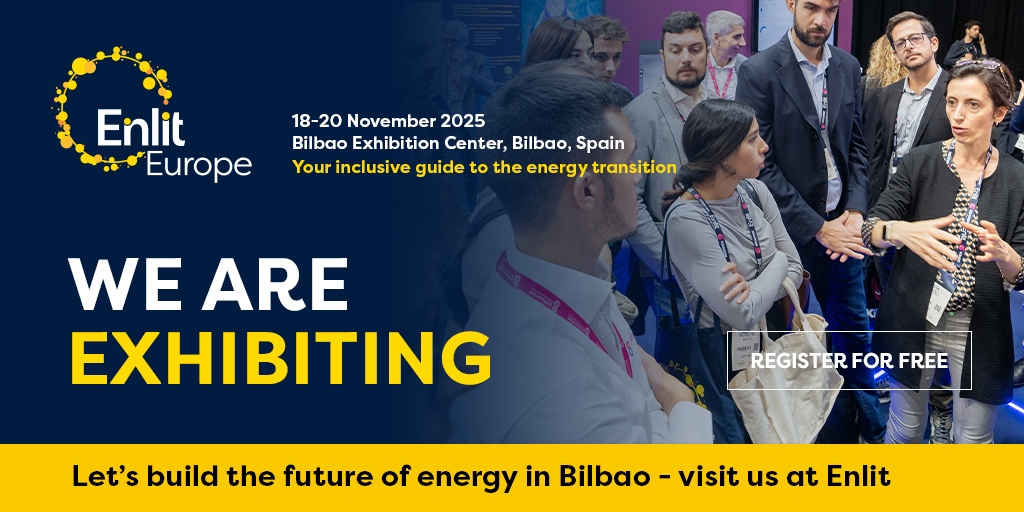
Enlit Europe
Germany Trade & Invest will be part of the German Pavilion at Europe´s most important forum for energy transition.
Semicon Europe
Germany Trade & Invest at SEMICON Europa 2025 - the strongest single event for electronics manufacturing in Europe.
Formnext
Germany Trade & Invest at Formnext – the industry hub for Additive Manufacturing

Heat Expo
Make an Appointment Now and Meet Us at Heat Expo!

Beijing Office

Chicago Office

Hong Kong Office

London Office

New York Office

Mumbai Office

San Francisco Office

Seoul Office

Shanghai Office

Singapore Office

Sydney Office

Tokyo Office

Toronto Office


Press Subscription
Register here to receive all current press releases regarding the business location Germany as soon as they go online. This service is free of charge.
Markets Germany
Our magazine presents stories about major investments and other exciting news from the world of FDI in Germany. If you want to be notified as soon as our next issue goes online register here!

Industry Information Service
Sign up to receive all of the latest free industry news and developments. We’ll also keep you informed on all forthcoming Germany Trade & Invest events and publications.

Information Service Powerhouse Eastern Germany
Sign up for our free Eastern Germany information service to receive occasional news and event updates from one of Europe’s most dynamic economic regions.

Markets Germany Newsletter
Want the latest news on FDI in Germany? Our free bi-monthly investment newsletter is an excellent way to learn more about business opportunities and investment climate in Germany. Register now!


Artificial Intelligence in Germany
Issue 2025/2026

The Medical Technology Industry in Germany
Issue 2025/2026


The Machinery and Equipment Industry in Germany
Issue 2025/2026

The Robotics & Automation Industry in Germany
Issue 2025


The Finance Sector in Germany
Issue 2022/2023 | Jul 05, 2022

The 3D Printing Industry in Germany
Issue 2023/2024 | Nov 12, 2023

Future Mobility in Germany
Issue 2022/2023 | Aug 02, 2022

The Food Supplements Market in Germany
Issue 2021/2022 | May 21, 2021

The Chemical Industry in Germany
Issue 2021 | January 27, 2021

The Pharmaceutical Industry in Germany
Issue 2021/22 | February 27, 2021
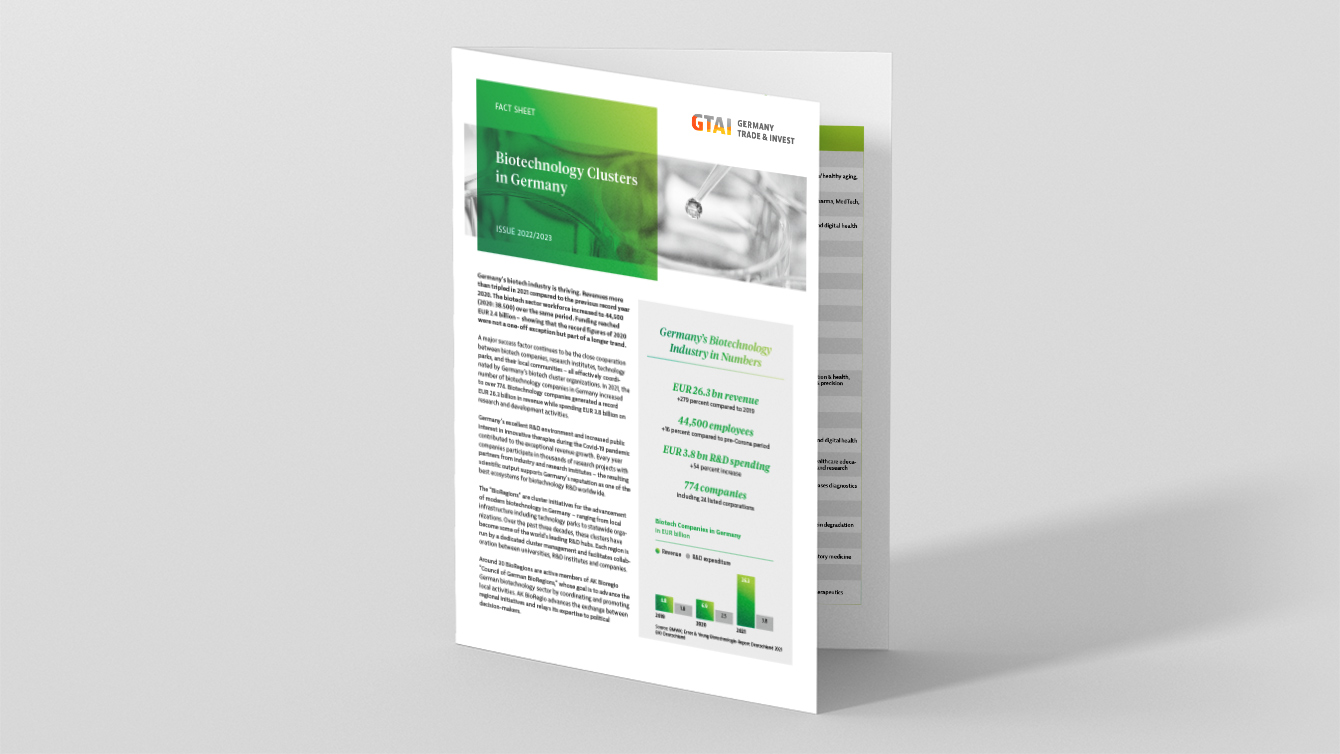
Biotechnology Clusters in Germany
Issue 2020/2021 | Oct 7, 2020

Education and Digital Learning in Germany
Issue 2020/2021 | August 20, 2020

Investor's Basics: Setting Up Business in Germany
Issue 2025 | March 26, 2025

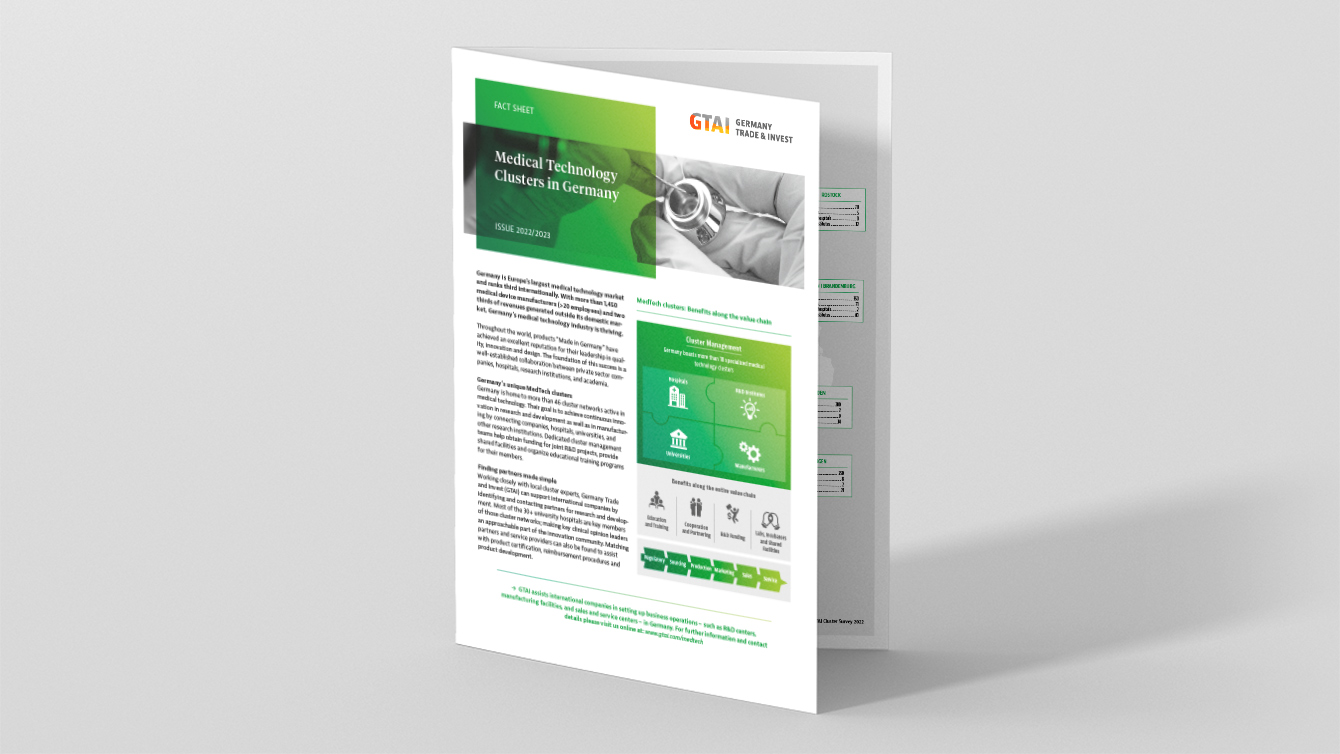
Medical Technology Clusters in Germany
Issue 2025/2026

Environmental Technologies in Germany
Issue 2019/2020 - June 5, 2019
The Machinery and Equipment Industry in Germany
Issue 2025/2026
