turnover in 2025

Your company is already operating in Germany and you would now like to export worldwide?
Germany’s electronics sector is a vibrant hub for innovation and cutting-edge technologies. It accounts for 23 percent of the country’s total R&D spending – driving breakthroughs in microelectronics, automation and digital solutions.
The industry serves as Europe’s leading production and sales market for electrical and electronic goods. With export share of around 50 percent, German electronics companies have a large international footprint.
The sector employs around 880,00 skilled professionals within Germany, offering diverse career path opportunities. Job security and continuous growth make it an attractive choice for both experienced professionals and newcomers.
Despite challenges, the industry’s aggregated turnover reached EUR 225 billion in 2025 – showcasing the sector’s resilience. Investors can tap into opportunities across the value chain: from microelectronic components and smart devices to green technologies.
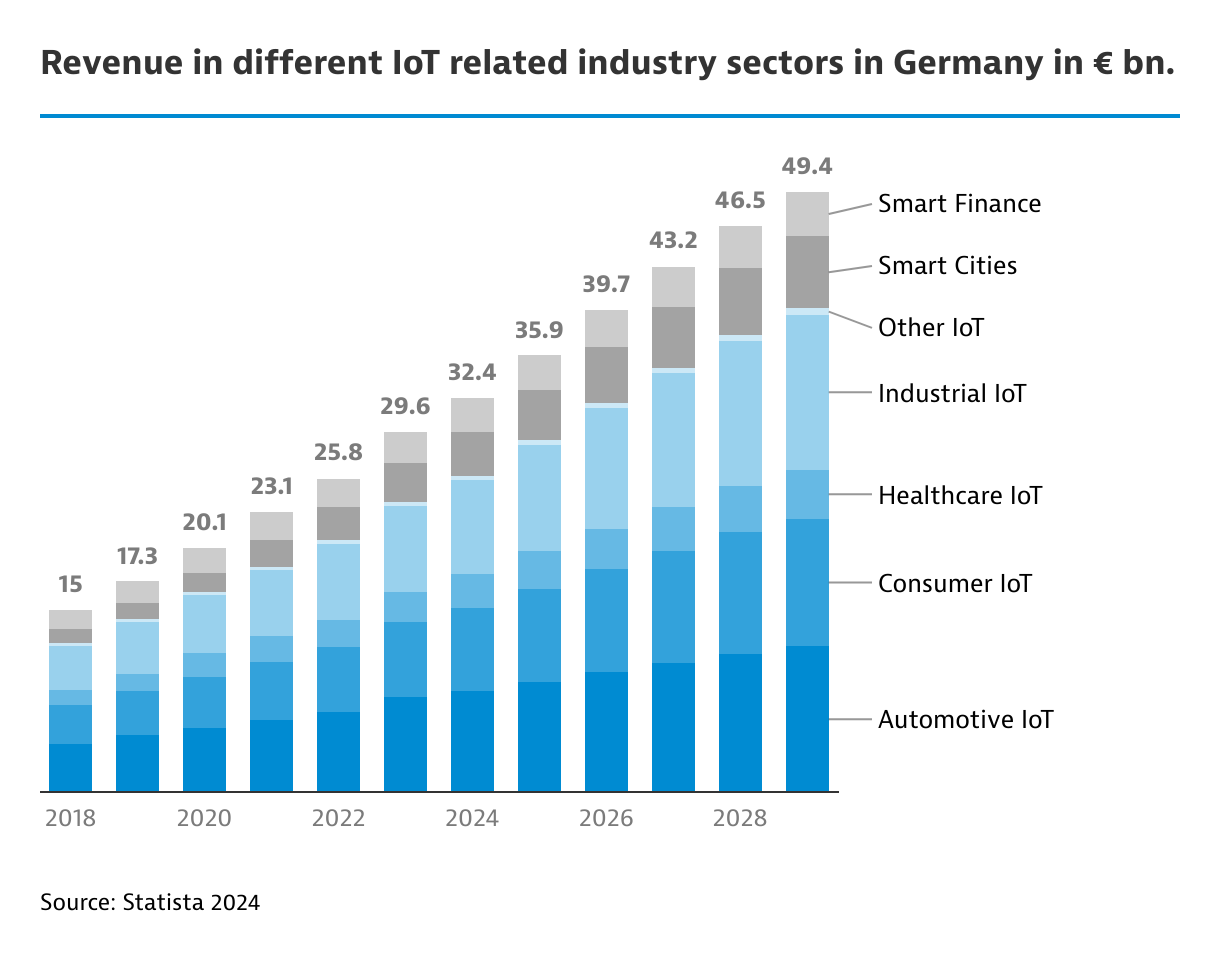
Germany’s focus on the Internet of Things (IoT) positions it as a leader in connected solutions. Internet of Things spending is projected to exceed EUR 35 billion, making it a lucrative market for potential investors.
Germany’s commitment to R&D is unparalleled. The industry invests a substantial 30 percent of all R&D spending in the country. Collaborations between industry players, research institutions and start-ups drive continuous innovation. Research and development fuels breakthroughs in microelectronics, smart manufacturing and sustainable technologies – positioning Germany at the forefront of global advancements.
Germany is Europe’s leading player in the semiconductor landscape. With major investment to the tune of around EUR 40 billion by 2030 at the production facilities of TSMC, Global Foundries, Infineon and others, Germany is consolidating its position as a strong player in the global semiconductor ecosystem.
The Internet of Things (IoT) is one of the most promising innovation accelerators for digital enterprises. Areas of application cover everything from manufacturing and construction to retail as well as transportation – in fact almost all sectors that utilize online devices or sensors. Internet of Things applications are of significant strategic importance for microelectronic manufacturers. Within Germany, the IoT market is expected to witness significant growth in the coming years. Forecasts predict an annual growth rate of around 10.6 percent from 2024 to 2028 – with total market value of around EUR 49 billion in 2028.
The German automotive industry is playing a pivotal role in the global transition to electric mobility solutions. Innovative systems in the field of battery management, power electronics and charging infrastructure will be needed to drive future electric mobility demand.
Germany’s energy transition is driving strong demand for advanced power electronics and electronic systems. Key opportunity areas include power semiconductors, inverters, converters, grid control electronics, and energy‑storage management systems for wind, solar and hydrogen applications. German industry leadership in industrial power electronics and automation makes the country a prime location to develop and scale hardware solutions for renewable generation, smart grids and sector coupling.
Germany’s role as a global manufacturing hub creates sustained demand for electronics used in industrial automation. Opportunities span sensors, embedded systems, control electronics, industrial communication, and edge computing for smart factories. The close integration of electronics suppliers with mechanical engineering, automotive and process industries enables rapid commercialization of high‑reliability and customized solutions.
Germany’s healthcare system and strong medical‑technology base offer attractive opportunities for electronic components and systems. Growth areas include imaging electronics, diagnostic devices, patient monitoring, and embedded electronics for digital health applications. High regulatory standards and close cooperation between manufacturers, hospitals and research institutes support the development of high‑value, export‑oriented medical electronics.
This program focuses on innovative electronic systems crucial for areas including autonomous vehicles, manufacturing machinery, medical technology, and telecommunications. The goal is to ensure that these systems continue to originate from Germany.
This plan outlines key strategic directions for the first four years of the European Union’s research and innovation framework program. It aims to restore industrial leadership, foster green and digital transformations, and allocate EUR 86 billion in funding for research and innovation initiatives.
The federal government advocates for accelerated procedures in planning and approval to promote investment. Examples include the construction of liquefied natural gas terminals and the expansion of renewable energies.
The German government is heavily investing in the development of renewable energy sources. Almost half of the electricity in Germany already comes from renewables. By 2030, this share is expected to reach 80 percent.