Investment Environment
Unlocking Growth Capital in Germany
A joint initiative from 24 leading venture capital firms aims to significantly increase the pool of investment capital available in Germany. The move will boost the prospects of start-ups for years to come.
Sep 23, 2026
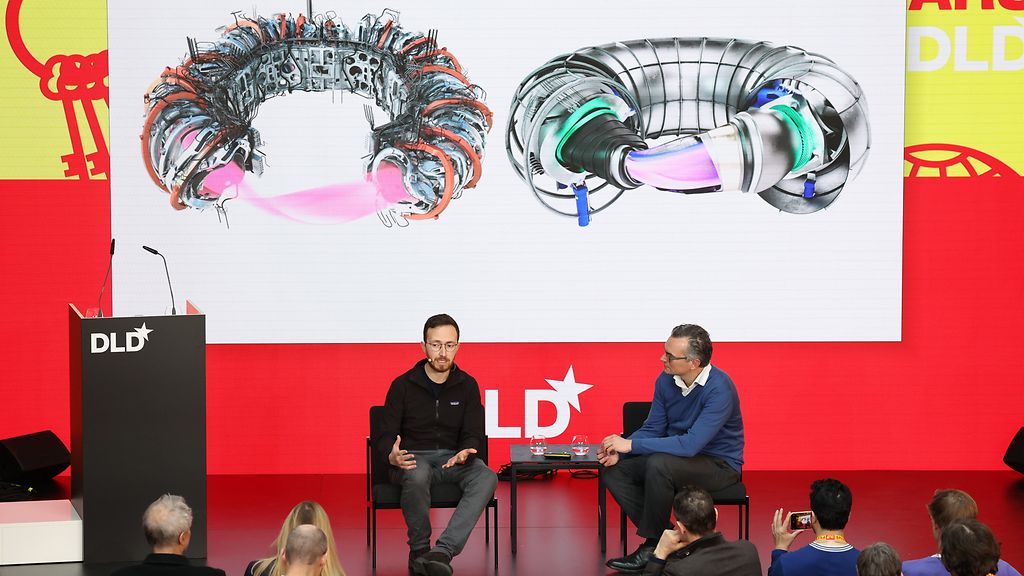
Proxima Fusion has big plans. The Munich-based start-up is developing a nuclear fusion demonstrator intended to pave the way for commercially generated fusion electricity. It’s a project of immense structural importance that demands substantial capital for research and development.
While the company has attracted major funding rounds, for example, more than EUR 411 million from the public-private VC platform HTGF, Proxima Fusion is expected to need significant additional capital as it advances its plan. The fact remains that concluding funding rounds of that magnitude is often harder for start-ups in Germany than elsewhere. So in spring 2026, the German Venture & Growth Forum was established to close the gap.
The forum brings together HTGF with 23 private venture capital firms from Germany and across Europe: Acton, Aenu, Atlantic, B2venture, Capnamic, Cherry, DTCP, Earlybird, Greenfield, Headline, HV Capital, Join Capital, Lakestar, Project A, Row Capital, Simon Capital, Speedinvest, TVM Capital, Redstone, Vorwerk Ventures, Vsquared, Xdeck Ventures and UVC Partners.

Their ambition is to channel approximately EUR 15 billion in additional private capital annually into German venture and growth funds – with a focus on sectors with high scaling potential, including AI, deep tech, energy, and robotics.
Activating pension power
The good news is that the capital exists. Institutional investors such as insurance companies and pension funds manage around EUR 2.8 trillion in Germany. Yet these investors have so far directed the vast majority of that wealth into traditional asset classes: only around EUR 400 million a year finds its way into European venture and growth funds.
The forum's backers want to change that calculus. “Even a minimal increase in German pension funds’ allocation to venture capital has a significant multiplier effect,” says Andreas Schwarzenbrunner, General Partner at Speedinvest. “We want to make it easier for institutional investors to enter the VC market by showing them what a structured entry can look like in practice.”
To that end, the forum has developed the German Venture & Growth Playbook – a practical guide designed to lower the barriers to entry for large institutional players.
New investment opportunities
The initiative marks a milestone in the development of the German VC landscape, says Jannis Gilde of the German Startup Association. “The targeted opening of large private capital sources to venture and growth financing will have noticeable effects in the coming years.” Those effects, he argues, include larger financing rounds with meaningful participation from European investors, reduced dependence on individual US backers, and a greater probability that companies founded in Germany will grow into genuine market leaders.
Schwarzenbrunner is optimistic that the initiative will be well received. “Germany is an attractive market for international investors due to its industrial know-how and high degree of vertical integration,” he says. Additional growth capital strengthens that foundation and creates “extremely great opportunities” for investments in rapidly growing companies.
And the first effects may already be visible. In July 2026 alone, German start-ups took in EUR 3.4 billion in VC funding, and 2026 is shaping up to be a record-equaling, perhaps record-breaking year.
For international start-ups eyeing Germany as a potential base for European expansion, the message is clear: the funding landscape is shifting in their favor.