FDI
Top Investments of the Year 2025 in Saxony-Anhalt
Saxony-Anhalt confirms its strength as an industrial and investment location.
Feb 20, 2026
Saxony-Anhalt continues to underscore its attractiveness as an innovative industrial and logistics location and was again able to record significant investments in 2025. With a diverse mix of high-tech, pharmaceuticals, logistics, chemicals and circular economy, the state is exceptionally well positioned for the future.
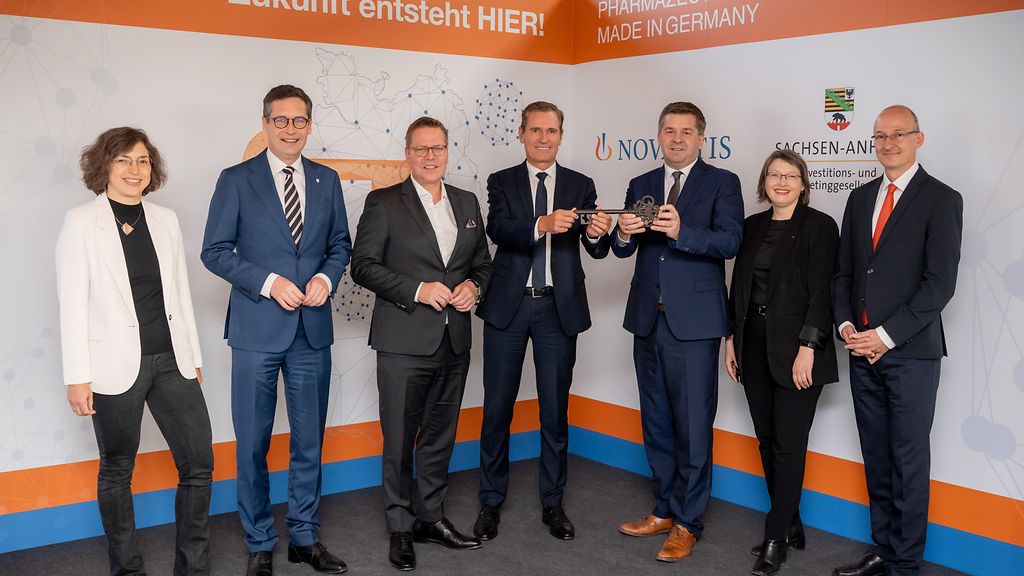
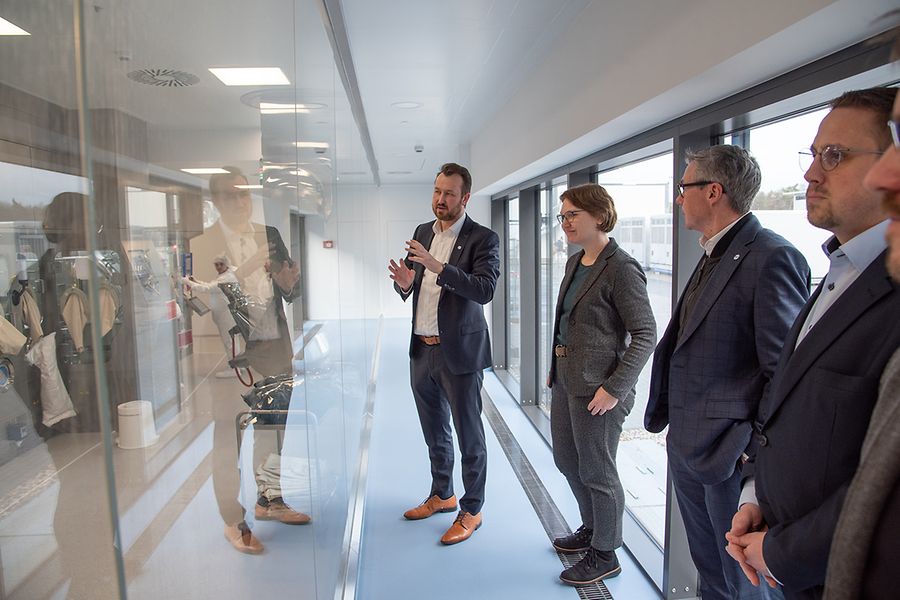
One of the most significant projects is the decision by Swiss-based Novartis AG to establish a new production facility for radioligand therapies in Halle (Saale). This technology is regarded as pioneering in personalized cancer medicine. Novartis Pharmaceuticals is investing around €37 million in Halle, supported by funding from the state of Saxony-Anhalt. The new facility will initially include a semi-automated production line for radioligand therapies and offers expansion options for future manufacturing steps. With Novartis’ investment, Saxony-Anhalt is further strengthening its profile as a future-oriented life sciences region. The state offers excellent conditions for investments in research-intensive industries thanks to its close integration of science, business and healthcare. Proximity to outstanding research institutions, access to Leipzig/Halle Airport and modern logistics infrastructure were decisive factors.

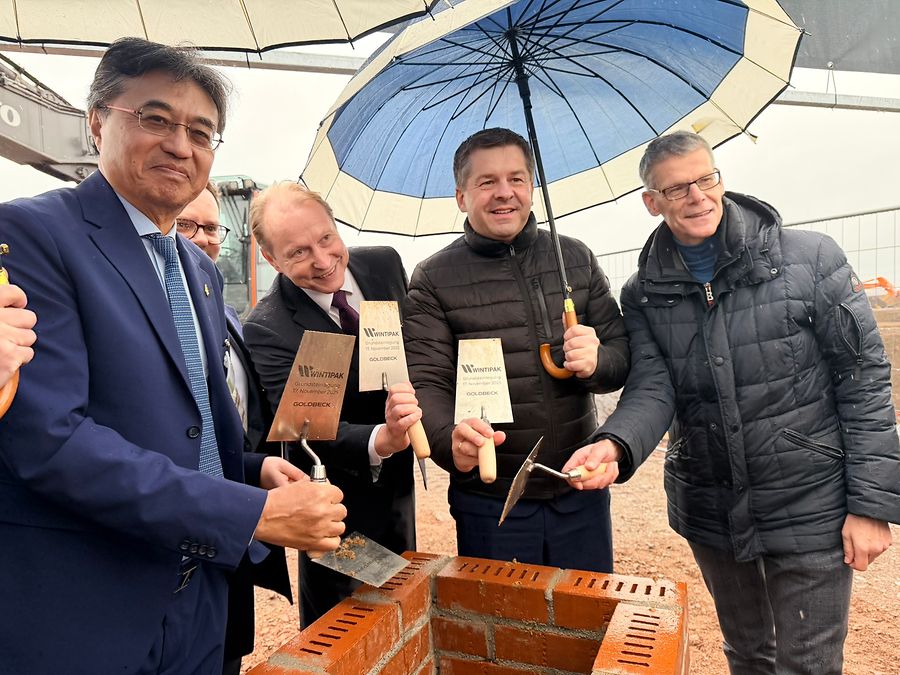
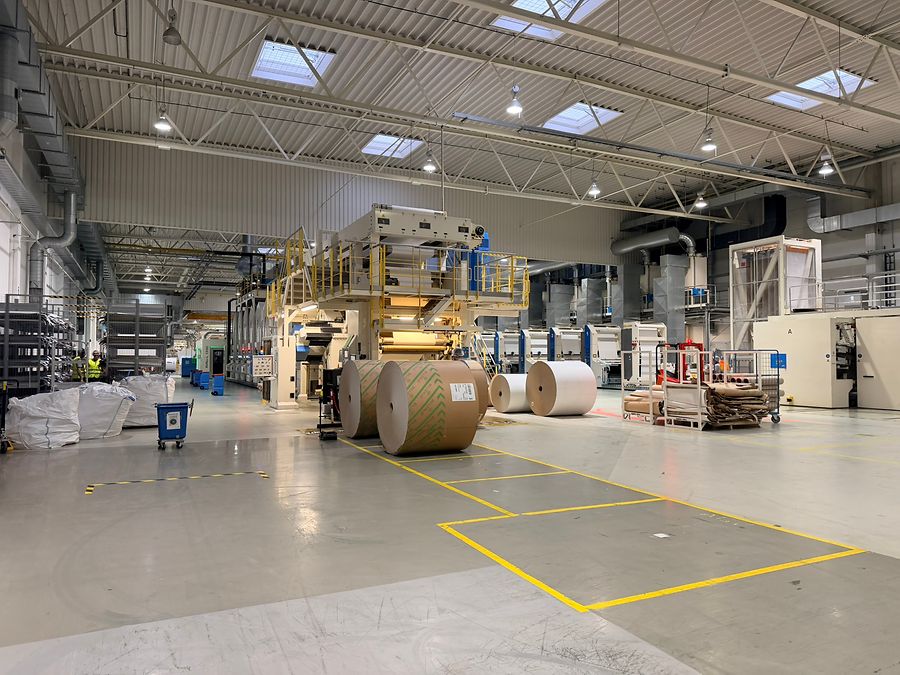
Alongside cutting-edge medicine, the industrial sector is also developing dynamically. Wintipak AG (Switzerland) is already implementing the third construction phase at Star Park Halle, expanding its capacities for aseptic packaging solutions. The investment creates additional space for office, technical and warehouse functions and supports the long-term safeguarding of the European production network. The company is thus making a clear commitment to the region and focusing on sustainable, efficient production processes.

From planning approval to official opening in just two years: Daimler Truck’s new logistics center near Halberstadt was inaugurated in July 2025. Nearly €500 million were invested in record time to construct two logistics halls, each 600 meters long and 200 meters wide, as well as a fully automated high-bay warehouse—40 meters high and, at 270,000 square meters, as large as 35 football fields. Around 300,000 parts, ranging from the smallest screw to complete truck cabs, are stored in Halberstadt, ready to be shipped to one of nearly 3,000 vehicle dealers in more than 170 countries. Up to 300,000 different spare parts are supplied to around 3,000 dealers worldwide.
The Global Parts Center is operated entirely CO₂-neutral and heated using heat pumps. The required electricity is generated by photovoltaic modules on the hall roofs, which produce up to 13 million kilowatt-hours—more than the Global Parts Center itself consumes.


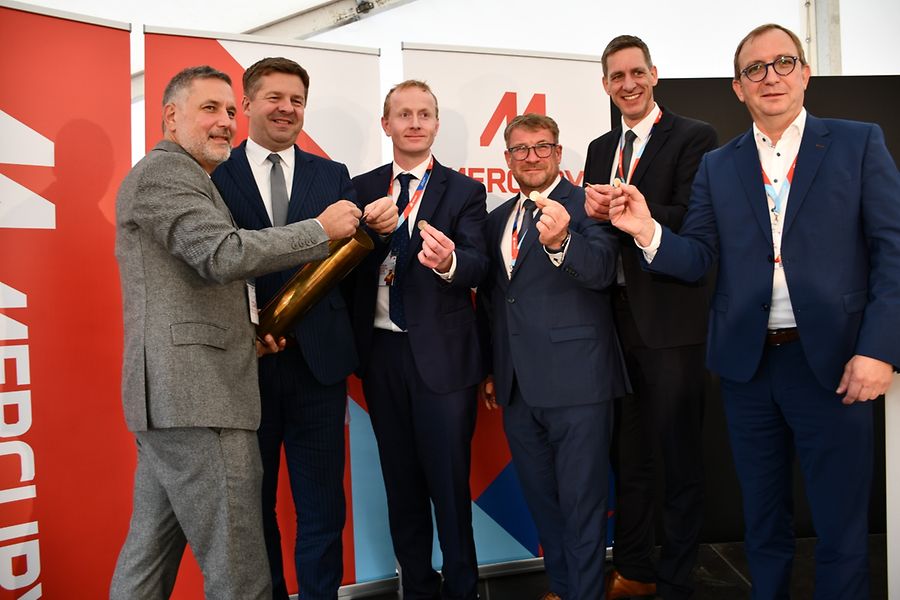
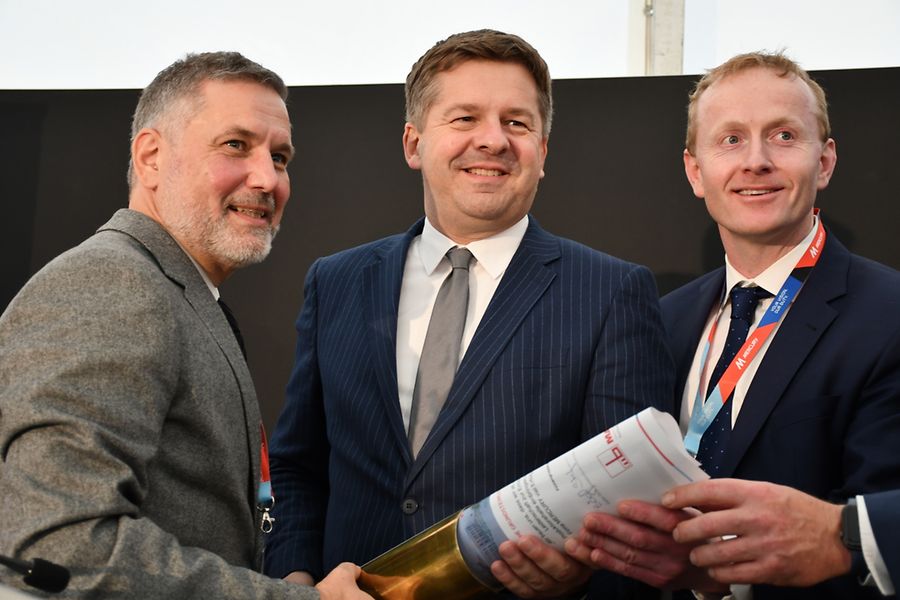
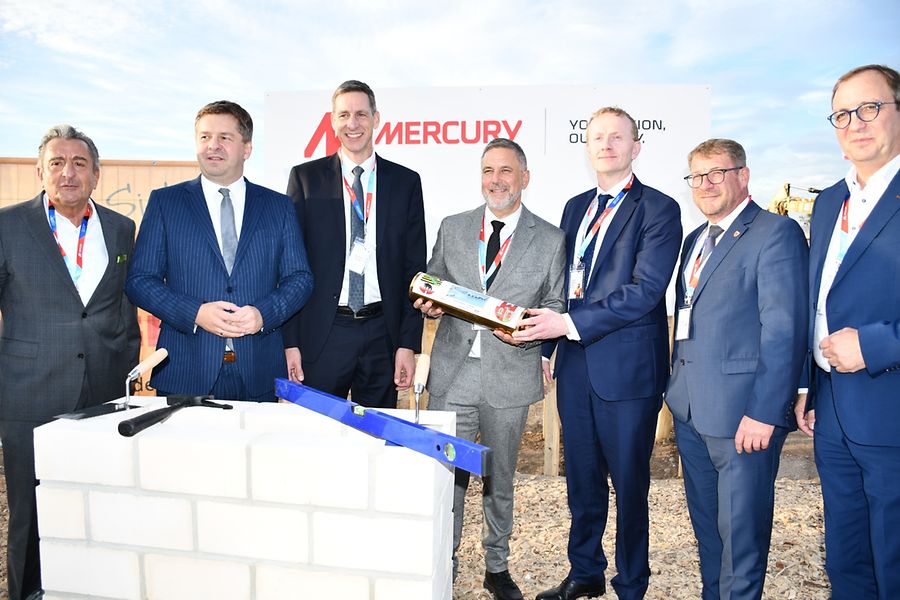
The Irish company Mercury reached a milestone in the construction of its state-of-the-art engineering and production facility in Schönebeck (Elbe), with an investment volume of up to €45 million. The topping-out ceremony was held in early May 2025. The project, which began construction in October 2024, is in its final phase and is scheduled to go into operation in April of this year. Mercury designs and delivers complex engineering and construction projects as well as complete technical building systems (heating, ventilation, automation) and works for global market leaders such as data centers and the semiconductor and pharmaceutical industries.

In 2025, the Finnish company UPM began producing commercial wood-based chemicals at its biorefinery in Leuna, Saxony-Anhalt. The start of production marks an important step toward market entry for bio-based alternatives to fossil raw materials. These enable a wide range of applications, including textiles, plastics, rubber, cosmetics and pharmaceuticals, and significantly reduce both the consumption of fossil resources and CO₂ emissions.
UPM is a global leader in the bio-based forestry industry with a history of more than 100 years. Its renewable, wood-based biochemicals offer sustainable, competitive and high-quality solutions for replacing fossil raw materials and are already used in various industries and applications. The group operates in six business segments and employs around 19,000 people worldwide, generating annual revenues of approximately €10.5 billion. UPM’s investment represents a major impetus and contribution to structural change and realignment in the Central German mining region and to the innovative diversification of the Leuna site. It is the largest single investment in the chemical industry in Germany in recent years.

At the beginning of 2025, Merz Pharma announced plans to invest an additional €50 million in expanded capacities for highly specialized active ingredients at the Biopharma Park Dessau-Roßlau. A new distribution and packaging center, including a new administration building, will be built, creating 92 new jobs. Since 2002, the Merz Group has been manufacturing high-quality aesthetic and neurological specialty products at the future-oriented Biopharma Park Dessau-Roßlau. Merz is also active in securing skilled labor and recently launched a joint project on “Smart Work” together with CWW GmbH in Dessau-Roßlau and the Fraunhofer Institute for Factory Operation and Automation (IFF) in Magdeburg. Using a modern and flexible work concept, the project aims to enhance employee autonomy and job satisfaction while attracting new skilled professionals.

TSR Recycling GmbH operates throughout Europe. With 180 sites in 13 countries, 100 facilities, around 4,500 employees and revenues of approximately €4.72 billion, the company sees itself as a global player in the recycling sector. TSR has developed a new process to convert various types of steel scrap into the recycling product TSR40. A second facility is now planned in Magdeburg, where up to 600,000 tons of scrap metal are expected to be processed annually starting in 2026. This will also reduce the CO₂ intensity of steel from 2.1 tons to 0.75 tons. The project includes the construction of new ship berths, expanded rail infrastructure, and modern operations and administrative buildings. The port’s so-called trimodal connectivity—by ship, rail and truck—was a key factor in the decision to choose Magdeburg as the location, which is set to become an important European hub. The TSR Group is not only focusing on “green” steel; through its subsidiary Battery Lifecycle Company (BLC), it is also investing in the recycling of electric vehicle batteries as a second promising value stream. Valuable raw materials such as nickel, cobalt, aluminum and copper are recovered from the approximately 550-kilogram batteries and returned to the industrial cycle, reducing the need for imports.
Further investments announced in Saxony-Anhalt in 2025 include, for example, Pellrex, which is building a new production hall and logistics area in Halberstadt to manufacture finished roof underlays from roofing membranes. In Möckern, Circtec will expand and modernize its existing facilities. The company produces sustainable fuels and circular chemicals from the vast quantities of waste tires generated annually. For example, carbon black—a fossil-based chemical—is extracted and recycled. Circtec is also a global leader in the refining and production of sustainable fuels and liquid chemicals of product-grade quality derived from the natural and synthetic rubber content of end-of-life tires. Windgeneratorenfertigung Magdeburg GmbH, finally, is a company that has been growing for more than 20 years in the generator manufacturing sector, particularly for Enercon wind turbines. Generator manufacturing includes the production of stators, rotors and rotor bearing units. The medium-sized company employs skilled specialists and managers in electronics, mechanical engineering and logistics. As production expands to include larger generators, the site will also grow, increasing its workforce by around 50 employees from 500 to 550.
Investments are also being made in the tourism sector. Environmentally conscious holidays are the focus of the Dutch company UplandParcs, which announced in 2025 plans to develop an exclusive holiday park with 121 holiday homes in the Harz region near Wernigerode. The planned investments strengthen regional development and highlight the region’s growth potential. The projected buildings feature high insulation standards, the integration of renewable energy, rainwater recovery systems, and durable, low-maintenance materials.