
Podcast INTO GERMANY!
Episode 35: Germany’s New Business Strategy: Martin Blessing on Industry, Innovation and Growth
- June 2026 -
How can Germany remain an attractive destination for international business expansions? Martin Blessing, Chancellor Friedrich Merz’ point man on investments and foreign business expansions explains how the country is positioning itself in a changing global economy, and why Germany is still central for companies looking to scale up in Europe.
Jun 22, 2026
Germany is adapting its investment strategy in response to global competition, technological change and shifting industrial dynamics. In this episode of Into Germany, we speak with Martin Blessing, former CEO of Commerzbank and, since late 2025, government commissioner - personal representative of the Chancellor for investments in Germany - and chairman of the supervisory board of Germany Trade & Invest (GTAI).
He explains how the country aims to strengthen its position as a location for industry, innovation and sustainable growth. We explore what makes Germany attractive for today’s growth-hungry international companies – from its strong industrial base to emerging sectors such as AI and space technologies - and where structural challenges still need to be addressed.
| Like Into Germany? You can get every episode on your favorite podcast platform: |
Our Guest
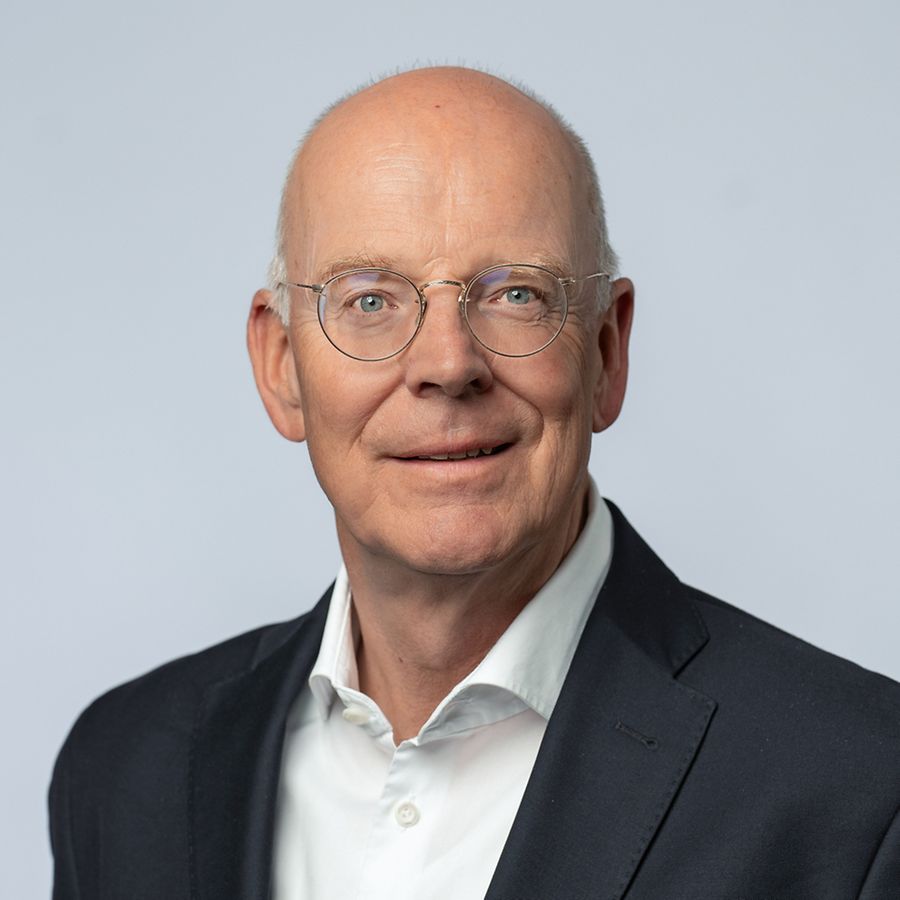
Martin Blessing is a German banker and business executive. He served as CEO of Commerzbank from 2008 to 2016 and held senior roles at UBS and McKinsey. In late 2025, he was appointed commissioner and chairman of the supervisory board of Germany Trade & Invest (GTAI), where he is responsible for the strategic oversight of Germany’s investment promotion efforts.
Transcript of this episode
German Chancellor Friedrich Merz:
Wir alle wissen, der Wohlstand in unserem Land hängt von gut geführten und gut finanzierten Unternehmen ab. Er hängt davon ab, ob Investoren auch in Zukunft Deutschland als Standort suchen und sich für Investitionen in Deutschland entscheiden, denn nur Investitionen schaffen Arbeitsplätze, nur Investitionen begründen Wertschöpfung und nur Investitionen sind auch Ausdruck hinreichend großen Vertrauens in unseren Standort.
Ü: We all know that our country’s prosperity depends on well-managed and well-financed companies. It depends on whether investors continue to view Germany as an attractive location and choose to invest here, because only investment creates jobs, only investment generates value, and only investment demonstrates sufficient confidence in our country as a business location.
Presenter:
That was German Chancellor Friedrich Merz in late 2025. His words came at a press conference at which he announced the appointment of a commissioner to oversee investment promotion of various types in Germany. So who is the chancellor’s point man on investments?
Martin Blessing was born in 1963 in the northern German city of Bremen to a family of bankers. His grandfather was president of the German national bank, and he followed in that tradition, becoming the CEO of Commerzbank. He’s also worked for McKinsey, Dresdner Bank and UBS. In late 2025, he was made commissioner and chairman of the supervisory board of Germany Trade & Invest, Germany’s international economic promotion agency.
Welcome to INTO GERMANY, the German business podcast. I’m your host Kelly O’Brien. So Martin Blessing, why do you think German Chancellor Friedrich Merz appointed you to take up such a central role at Germany Trade & Invest, or GTAI?
Martin Blessing:
Last year, when the new government was formed, the government decided to basically end 25 years of under investment in Germany in infrastructure and defense. That's why they created the Sondervermögen, i.e. the special fund to invest in Germany. And they also realized that we need more money for investments than only public money, but we also need private money for infrastructure investments and more investments to help foster growth in Germany. And therefore I was asked by Friedrich Merz to take up the role of Chairman here at Germany Trade and Invest, and also become his personal representative for investments in Germany to combine on the one hand GTAI and the Ministry of Economic Affairs with the other hand the to help to have a single point of entry for international investors.
Presenter:
The Sondervermögen, of which Martin Blessing just spoke, is worth more than half a TRILLION euros. His appointment ties GTAI and its parent ministry, the Ministry for Economic Affairs and Energy even closer to the Chancellor’s Office, the Kanzleramt. For listeners less familiar with Germany’s political system: The Chancellor’s Office is a large and powerful government entity akin to the White House in the US or Number 10 Downing Street in the UK.
Given the Chancellor’s emphasis on investment as a central driver of Germany’s economic future, it seems fitting that the Chancellor’s Office is taking a more direct role.
So let’s talk about investment. It’s a broad term that can mean different things in different contexts. Can you break down the concept for us?
Martin Blessing:
Well, when thinking about the role, I said, I need to focus on three areas. One is to basically help Greenfield, i.e. new investors or Brownfield investors, investors that are already in Germany, but want to expand. To, for example, build a new factory, to expand existing production facilities, to start a research center. So it's about classical companies trying to set up an operation or expand their operation in Germany. The second area is infrastructure. There are a lot of international infrastructure investors that can help us to build bridges, to invest into the energy infrastructure, into the electricity transportation, into data centers or also into logistics for defense. So, there are a lot of areas where infrastructure investors in private-public partnerships can help us leverage in government money to basically speed up infrastructure investments. And the third area is start-up scale-ups, especially on the scale-up area where a lot of good German companies that have been receiving seed money and series A money and now need to move from building or having the first concept into building the first, for example, fusion test reactor. They need a lot of money and helping them to attract international investors to co-invest into these ventures and into these build-ups that is the third area where I'm focusing on.
Presenter:
That’s why we make this podcast – to inform international entrepreneurs and businesspeople about the opportunities available in Germany. So let’s discuss some of the hot topics right now. You can hardly go anywhere without being confronted by artificial intelligence. No wonder, the Merz government has made it the priority of all priorities. The country invests billions of euros in AI research, start-ups and infrastructure, with a national AI strategy aiming to strengthen both basic research and industrial application.
Martin Blessing:
This is definitely one of the most interesting areas. I think it has the potential to fundamentally change the way we are operating and it's of course also an important topic in Germany. There are a lot of companies that invest into artificial intelligence. The EU Commission wants to make it easier for European but also for German companies to use AI in industrial processes and I think the combination of physical infrastructure or physical producing capacity in Germany with AI is a stronghold so when AI moves into the physical world, machinery and so on, Germany is well equipped to capture a lot of the good investment flows and the innovation that will be happening in that sector.
Presenter:
So Germany’s advantage may lie less in consumer AI and more in applying AI to the physical world – to manufacturing, machinery and industrial infrastructure. That brings us to the broader topic of deeptech, an area where Germany is often seen as particularly strong.
Martin Blessing
Yes it is. Also the government has a high tech agenda where we try to support areas in quantum computing for example. We have very good research centers that focus on this area and we want to build one of the best and first quantum computing ecosystem and we're on track on doing that.
Presenter:
Let’s talk now about robotics: According to the International Federation of Robotics World Report, Germany is Europe’s leading robotics nation across multiple key indicators. It ranks among the world’s top five in industrial robot density. The sector clearly builds on the country’s strong manufacturing base and automotive heritage, doesn’t it?
Martin Blessing:
Yes, and robotics is something that in factories will become more and more important. The combination of robotics and AI is one of the things where Germany will and should focus on. There are a lot of SMEs in that sector that help and support. So we see also even services where robotics can help and this is a super interesting field for Germany because it combines our ability to use modern AI driven technology with our capacity to produce the world's best machinery equipment.
Presenter:
To judge by the meteoric rise of companies like Helsing and Quantum Systems, dual use and defense is another very hot sector at present…
Martin Blessing:
That is very clear: Defense and dual-use goods are a significant topic. As you know, the German government has decided to build the strongest conventional army in Europe. And of course, a lot of technology is needed to support this. A lot of tech is needed. It will not be only an army with old weapons or historically always important weapons but also with new technology and a lot of money is basically channeled into that sector and that will be supported of course also by significant investments by the private sector.
Presenter:
The geopolitical environment has fundamentally changed Europe’s approach to security and defense. It has also reshaped the debate around energy: Energy policy is now increasingly seen as a question of economic resilience and strategic independence. What kind of investors or technologies are most urgently needed to move the transition to clean energy forward?
Martin Blessing:
Clean energy is one of our clear points. We need to basically move to a carbon neutral environment by 2045. So we need a lot of investments into energy production, but also into energy distribution. So the TSOs need to invest a lot of money. But even more importantly also the regional distribution networks need to be strengthened and there will be significant investment needs in these areas and we are currently discussing with a lot of regional energy producers and distributors how they can move forward, what kind of structures can be found to help them basically being able to to free up the money and the capital equity and debt to basically upgrade their distribution and production capacities.
Presenter:
The government is investing heavily to support this transition, for example through the Climate and Transformation Fund, which runs until 2027 and provides more than 200 billion euros for decarbonizing industry, expanding renewable energy, supporting hydrogen projects and modernizing infrastructure. This is where the TSOs Martin Blessing mentioned come in: Those transmission system operators are responsible for the high-voltage electricity grid.
All in all, this commitment to climate neutrality is creating opportunities across the entire value chain.
Let’s stay with energy for a bit longer as we take a break from our interview for our regular round-up of some top business stories from Germany.
NEWS
Storage Record
The first quarter of 2026 saw a record 2.2 gigawatt hours’ expansion in Germany’s energy battery storage capacity. Large-scale battery storage more than doubled over the past year. Battery storage is key to Germany’s transition to clean energy as a way of harnessing electricity produced at times when it’s not immediately needed.
Billion Dollar Baby
Staying with energy – batteries offer huge business opportunities, as shown by a new German unicorn. Storage battery specialist CMBlu achieved a valuation of one billion dollars after a successful 50 million euro funding round. The Munich start-up specializes in naturally based alternatives to conventional lithium-ion batteries.
EV Resurgence
Electric vehicle numbers in Germany are on the rise thanks to a new subsidy program and a spike in oil prices caused by conflict in the Middle East. EV registrations were up 66 percent in March, with internal combustion engine vehicle numbers falling. EV buyers can presently take advantage of incentives up to 6000 euros.
R&D Rise
Also on the increase is research and development in Germany. The latest figures from the Federal Statistical Office show R&D rose by almost four percent in 2024. All told, more than 137 billion euros were spent that year – that was more than 3 percent of German GDP.
Venturing Capital
And VC investments in innovative young companies in Germany are also trending upward. The country’s economic development bank the KfW says that 1.7 billion euros flowed into German start-ups in the first quarter of 2026. The health sector and fintechs were the most popular targets for investors.
NEWS END
Presenter:
With that, let’s return to our discussion with Martin Blessing, Germany’s point man on international investments of all sorts – including business expansions to Europe’s largest economy.
Let’s talk health. Germany was once known as the “world’s pharmacy”, but that reputation faded a bit. Parts of pharmaceutical production moved to Asia over the years, creating dependencies and occasional supply bottlenecks. Manufacturers have also been dealing with rising costs and regulatory complexity.
However, that picture is starting to shift again, as Germany strengthens its position and re-establishes itself as one of the world’s leading health markets. What role do you see for Germany in this sector going forward?
Martin Blessing:
Well, Germany and Europe is one of the most important health markets. The aging population will drive the need to further invest into health. That basically means not only hospital capacity, but especially also pharmaceuticals. There is a lot of great research in Germany. There are a lot of good universities where you can build this. I think what we need to do is to be aware that of course other regions like the US and Asia especially China are pushing heavily for that sector so we need think also about how to make trials easier, how to test new pharmaceuticals with patients in a most efficient way and how to create a system and an environment that makes it attractive for pharmaceutical companies to do research development, but ideally also production here in Europe and especially in Germany.
Presenter:
Pharmaceuticals, robotics, energy — whatever sector you look at, all of them are being affected by the current geopolitical tensions. How is this global uncertainty changing Germany and the EU’s economic position?
Martin Blessing:
I think the current economic uncertainties, especially with the still ongoing war in the Middle East, of course put a lot of pressure on energy prices. So energy prices are much higher now than they used to be at the beginning of 2026 and probably will continue to stay elevated for a period of time. We also need to see that the tariff system that the U.S. Is imposing will make it more difficult to operate as an export nation. Additionally, we see that Chinese companies are trying to push their goods more into to Europe, because it has become more difficult for them to export into the US. So there will be a continuous debate also in Europe how to look at our markets, how we can find the right balance between open but also not being too, how would I call it, too open if the other party is not open. So to create a level playing field for our exporters, but also for our producers, vis-a-vis Chinese imports. And that will be an ongoing debate in Europe that will gain speed and that will maybe lead also to changes in the way we operate with the rest of the world, especially Asia.
Presenter:
Let’s address some of the pain points. Costs in Germany tend to be higher, for example when it comes to energy. Why should companies still consider Germany as a business location?
Martin Blessing:
I think Germany is a very stable country with a very business-friendly environment, where especially also research is very strong, very strong universities, very good skilled labor force, rule of law is very very strong which is also important for investors. Stability and predictability is high, so there are a lot of things that are as important for investors as purely only the energy costs. If you're a producer of a standard good, where energy is the most important cost factor, you wouldn't probably choose Germany, but if you have a lot of research, development, you need a skilled labor force, you need a stable environment, you need a good entry point into the European market, then Germany is a great place to start working.
Presenter:
Digitalization hasn’t been a German strength. Another complaint – one that we also hear often on this podcast – is that there’s too much bureaucracy. What’s the government trying to do to address these two long-standing problems?
Martin Blessing:
The government already has started with the deregulation agenda. There are a lot of things that are currently being done on the federal but also on the state level. At the end of 2025, the federal government and the 16 state governments agreed in a 60 page document on about 200 measures they want to jointly implement to speed up processes. One of the topics is for example to label more infrastructure projects as project of overarching national interest which then speeds up the whole application processes to get something done. Additionally, we have created a Ministry for Digitalization and State Modernization that has come up with an ambitious agenda to push forward the German digitalization. We already moved up two places in terms of being digitized. We are not good enough. We should move up further. But there's a clear, clear ambition of the government and a clear path forward tackling these issues and trying to catch up. We have been too slow, but we're catching up.
Presenter:
One thing that differentiates Germany from, say the UK or France, is its federal structure with 16 regional states. Is that an advantage or a disadvantage?
Martin Blessing:
I think it's both of it, a bit. It has an advantage because the different states are very involved. You need local support if you want to set up a business and there, the different States are closer to the municipalities than the federal state would be. They can organize clusters. So that is very helpful. Sometimes if we want to move forward in joint application of processes, then sometimes it becomes a bit more difficult to get them all organized, but you have a lot of federal states globally where you need to have the federal government act together with the local participants. Because in the end all business is local, right? If you can't convince the local community that building a new business is the right thing in that local environment and you don't feel welcomed on a local base, it doesn't help that the federal government is super helpful. You want to be feeling at home and embraced at the place where you set up your business and that is a local place.
Presenter:
Looking at the economic picture more broadly: Germany is expected to record minimal growth in 2026, after near-stagnation in 2025. This follows two years of contraction. Given this backdrop, how long do you think it will take Germany to return to stronger, more sustainable growth?
Martin Blessing:
That is the 100,000 dollar question. In 2026, given the circumstances of tariffs and the war in the Middle East, the growth expectations for this year have been reduced. We assume a slight growth this year and then increasing growth in 27 and 28, when a lot of the measures kick in. But we are also living in an unstable environment, so it's not 100% clear how it plays out. It will be a lot of work that needs to be done to increase the growth momentum here in this country.
Presenter:
As we have heard, a great deal is already being done to address the current challenges. So how optimistic are you about Germany’s overall economic future?
Martin Blessing:
I'm always an optimist, I think we have the potential to basically increase the growth of the country, to move the country forward if we invest in a infrastructure, but also new technology, new companies, to build the German Mittelstand of tomorrow, which we have all opportunities to do. I'm super optimistic about the future of the country.
Presenter:
Mittelstand is the German for the middle class – or small- to medium-sized enterprises, which are a huge part of the German economy. Martin Blessing, Chancellor Merz has tasked you – among other things – to “sell” Germany to international investors. So let’s finish by hearing your 90-second elevator pitch. Why Germany?
Martin Blessing:
We have realized in Germany that we have under-invested for 25 years. We are changing course, we are freeing up significant federal money and public budget to increase our infrastructure, to push forward growth initiatives. We’re working on social reforms to make the budget more stable. We are still the last of the G7 countries that has a AAA rating. We are the highest among G20 in the rule of law and we have one of the best environments for research development. We have a very skilled labor force and therefore as an entry point into the EU market we are great place to invest.
Presenter:
Perfect words to close our discussion on the present and future of the German economy! Many thanks to Martin Blessing for sharing his insights on where the German economy is at present and where it wants to go in the future. Now, as always, it’s time to find out more on HOW GERMANY WORKS.
HOW GERMANY WORKS
As we heard earlier, Martin Blessing was commissioned in his current post by the German Chancellery. The phrase is used to describe both the Berlin building where Chancellor Friedrich Merz works AND the office he exercises. The Chancellery has been a center of power in Germany going all the way back to 1867. It mirrors Germany’s 16 ministries in national government, providing administrative support, strategic coordination and operational oversight of national policies. It’s also the central control hub for the federal government, guiding policy decisions, managing information flow between ministries and coordinating with Germany’s 16 regional states. And THAT’S how Germany Works.
Presenter:
So there you go. If you’re interested in expanding your business to Germany — and maybe having a look at the Kanzleramt with its striking modernist architecture — you should reach out to Germany Trade and Invest. We can advise you and help you discover whether Germany could be the place for you… all at no cost because we’re a government agency. Let’s talk at gtai.com. We’re also keen on your opinions, suggestions and questions. Please leave a comment in your favorite podcast app or drop us a line. You’ll find all the details in our show notes.
And that's it. Thanks for listening, auf Wiederhören - and remember: GERMANY MEANS BUSINESS.

